What Nobody Tells You About Buying Your First Domain
Muhammad Saad
Author
June 10, 2026
12 min read
Most first-time buyers focus on price and age and miss what actually matters. Here is what experienced buyers know before they purchase.
There is a moment every first-time buyer experiences. You have an idea, a project, or a business you want to bring online. You head to a domain marketplace, find something available that sounds reasonable, and complete the purchase in under five minutes. The excitement of starting something new makes the decision feel simple.
What most people discover weeks or months later is that the choice deserved more thought than it received. Not because buying a domain is complicated, but because most of the information that actually matters never came up during the process. Nobody explained what to look for. Nobody mentioned what questions were worth asking. The transaction completed, the domain transferred, and the learning happened afterward — sometimes at a significant cost.
This article is about closing that gap. It is written for anyone stepping into the domain space for the first time and wanting to understand what experienced buyers know before making a decision rather than after.
A Domain Is Not Just a Web Address
The most common mistake first-time buyers make is treating a domain like a username. Something functional that gets registered quickly so the real work can begin. A detail rather than a decision.
In practice, your domain is the foundation your entire online presence gets built on. Every piece of content you publish, every backlink you earn, every visitor who finds you through search — all of it connects back to that single starting point. The authority you build, the trust search engines develop toward your website, and the momentum your project gains over time are all tied directly to the domain underneath it.
This matters because changing a domain later is far more disruptive than most beginners anticipate. It is possible, but it comes with real consequences for rankings, traffic, and the authority you have already accumulated. The cleaner the decision at the beginning, the less you will need to undo later.
Understanding a domain as a foundation rather than a placeholder changes how seriously you approach the purchase. It should feel like choosing the ground you are going to build on, because that is exactly what it is.
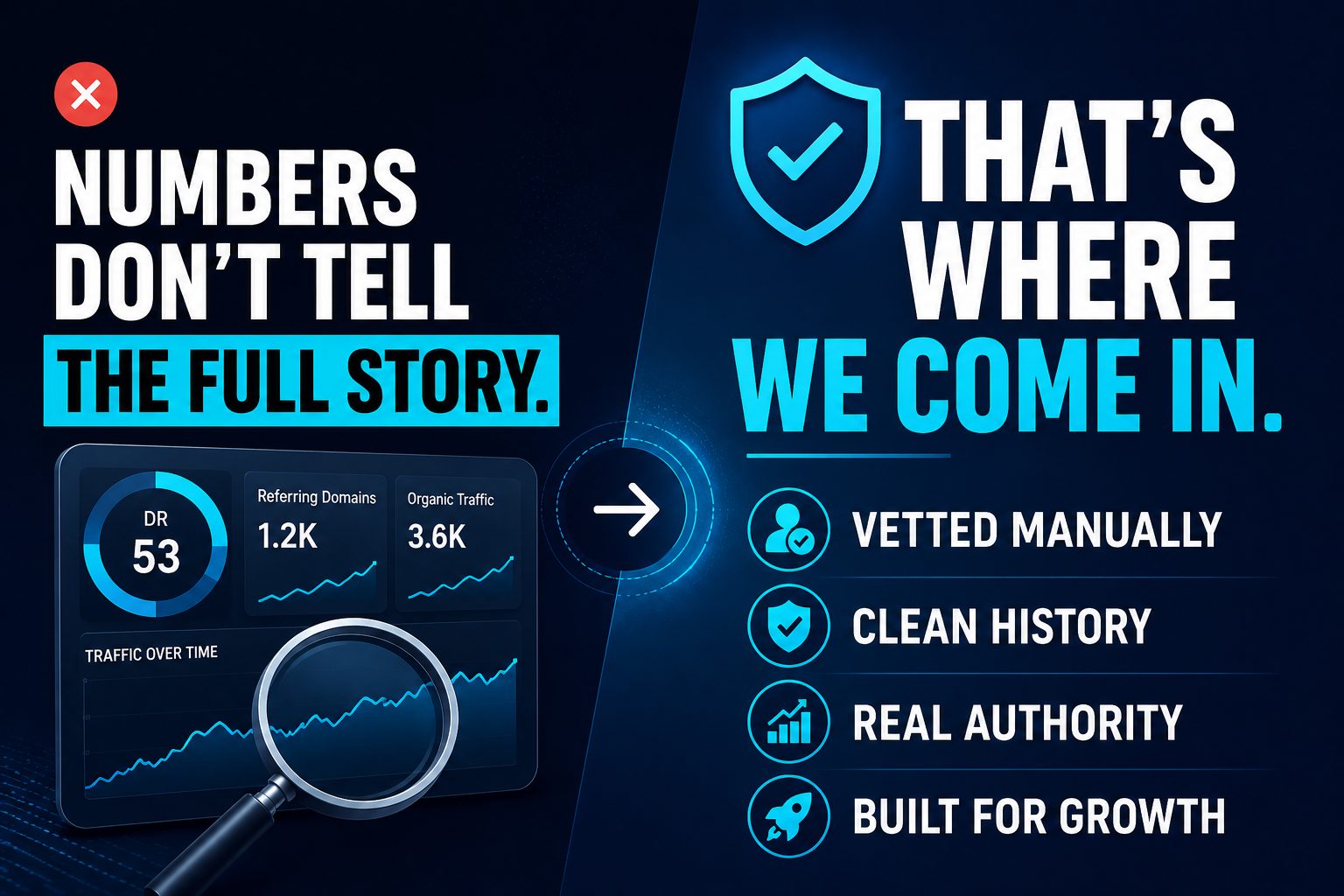
Domain research tools are widely available and genuinely useful as a starting point. They become a problem when first-time buyers treat the numbers they display as the complete picture of a domain's value. That gap between what metrics show and what actually matters is where many early purchasing mistakes are made.
Authority scores, referring domain counts, and traffic estimates are directional signals. They suggest a general picture of where a domain stands but they do not explain how it got there or whether that position is built on something durable. Two domains showing identical scores can represent fundamentally different investment qualities depending entirely on what created those numbers.
A score that developed through years of genuine recognition from relevant, editorial sources reflects something real and transferable. A score that was inflated through link schemes, manipulated networks, or low-quality tactics may display the same number on screen while carrying almost none of the underlying value that number implies. Inside the tool they look identical. In practice they perform completely differently once you start building.
This does not mean metrics are useless. It means they are a starting point for investigation rather than a conclusion. The number tells you where to look. It does not tell you what you will find when you get there.
The Habit That Changes Everything
Experienced buyers ask where the numbers came from rather than simply how large they are. A modest authority score built on clean, authentic signals consistently creates a stronger foundation than a larger score built on shortcuts. Quality of evidence matters more than size of number, and developing that instinct early protects you from decisions that look reasonable on the surface but create problems underneath.
Every Domain Has a History Worth Understanding
This is the part of the buying process that first-time buyers most consistently skip, and it is also the part that creates the most expensive surprises later.
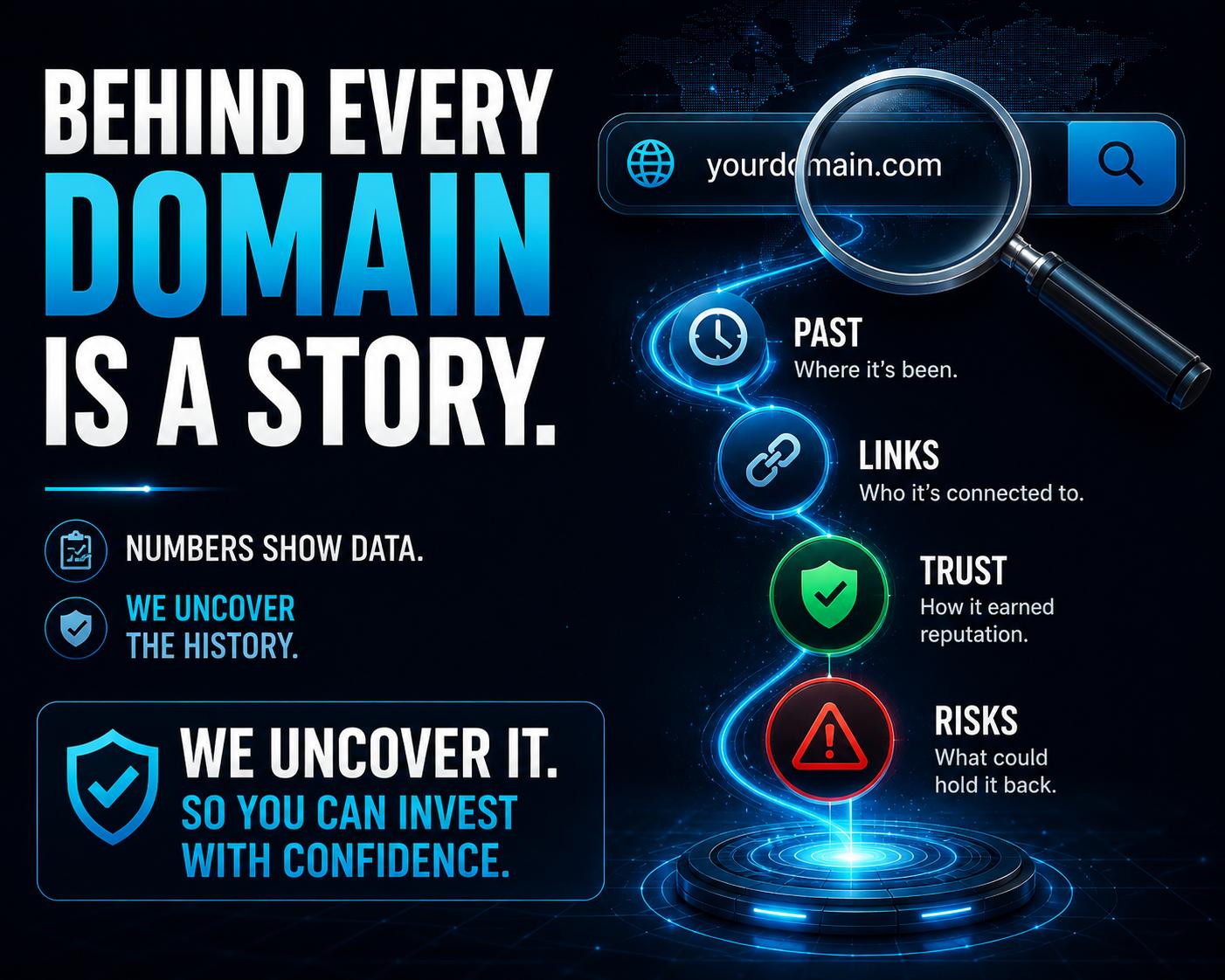
Every domain has a story. Some stories are straightforward — a genuine project that ran for several years, built a real audience, earned recognition naturally, and eventually became available when the owner moved on for unrelated reasons. Other stories involve multiple ownership changes, shifting directions across unrelated niches, questionable tactics designed to manipulate rankings, and eventual abandonment once those tactics stopped working.
As a buyer, you inherit whatever that story left behind. If the history is clean and relevant, that inheritance works in your favour from the beginning. If the history involves problems a previous owner walked away from, those problems often follow the domain into new ownership without any obvious warning signs during the purchase process.
Understanding what a domain was used for, how consistently it maintained focus across its active years, and whether anything in its background raises genuine concern is not optional for serious buyers. It is one of the most valuable steps in the entire process.
Price Points Reflect Different Levels of Evidence
First-time buyers often approach domain pricing with one of two assumptions. Either a higher price means better quality, or a lower price signals something suspicious. Both assumptions lead to avoidable mistakes because neither is reliably true.
An affordable domain can represent genuine value for the right project. A modest backlink profile, a shorter period of active history, or a niche with less commercial intensity does not make a domain a poor investment. For a buyer whose project aligns naturally with that level of foundation — a first website, a content experiment, a low-competition niche with realistic growth expectations — an affordable domain from a properly evaluated source can be exactly the right starting point. There is nothing to apologize for in that decision.
A higher priced domain should reflect specific, verifiable evidence rather than simply confident pricing. Premium listings are justified when the backlink profile is genuinely strong and still active, when the historical identity is coherent and relevant, and when the authority signals behind the number are real rather than manufactured.
The question that matters at every price point is straightforward. Does the evidence behind this domain genuinely support what I am trying to build?
Niche Alignment Is More Important Than Most Buyers Realize
One of the most overlooked factors in a first domain purchase is how naturally the domain's historical focus connects to the buyer's intended direction. This consideration applies most directly to aged domains but carries relevance in any purchase where existing signals are part of the decision.
A domain that spent years consistently associated with a particular subject area carries contextual recognition within that space. Search engines developed an understanding of what that domain represented and what kind of audience it served. A buyer working in the same niche inherits that understanding, creating a natural alignment between existing signals and new content that tends to produce smoother early results.
A domain whose history points in a completely different direction requires a repositioning period before its existing authority begins working meaningfully for the new owner. This is manageable and happens regularly across the industry, but it is worth factoring into the decision rather than discovering it as an unexpected obstacle after purchase.
The practical question is whether the domain's past feels like a natural continuation of what you are planning or whether it requires significant reinterpretation before it becomes useful. Domains that feel like a natural fit tend to perform more predictably in the early stages.
Traffic Domains Deserve Their Own Conversation
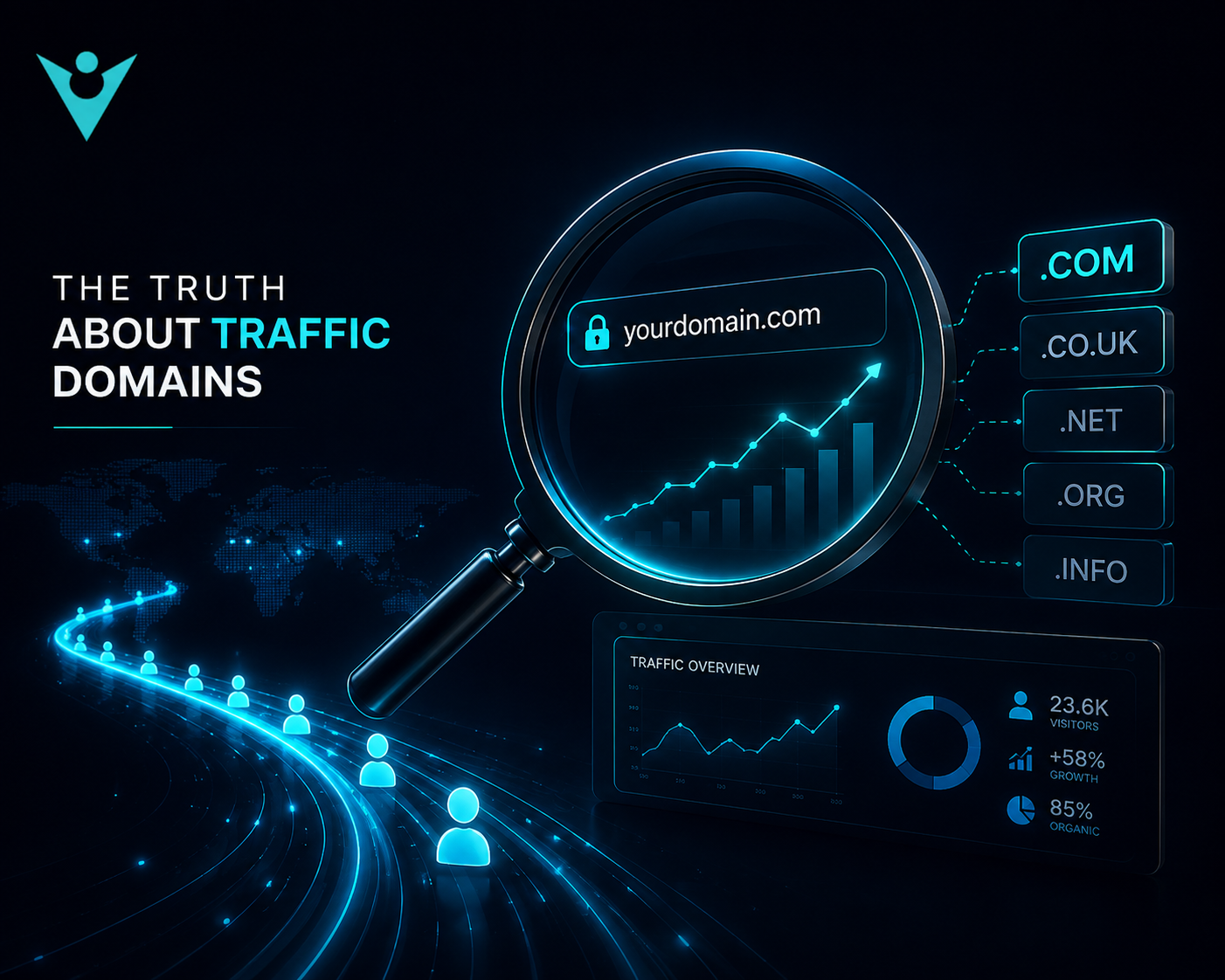
One category that first-time buyers frequently encounter without fully understanding is traffic domains. These are domains that already receive organic visitors before a new owner publishes a single piece of content. The idea of inheriting existing traffic sounds immediately attractive, and in the right circumstances it genuinely is.
What matters is understanding where that traffic actually comes from and whether it is sustainable. Traffic generated through genuine historical search visibility in a relevant niche represents real opportunity. Visitors were already finding the domain for reasons that align with what a new owner plans to build. That momentum can be maintained and grown with the right strategy.
Understanding the difference between traffic that helps and traffic that simply appears in analytics is one of the distinctions that separates experienced domain buyers from first-time buyers who learned it the hard way.
What to Actually Do Before You Buy
Practical steps matter more than general awareness at the moment of purchase. Regardless of budget, domain type, or niche, a few core checks apply to every serious buying decision.
Review where the backlinks came from and whether those sources still carry genuine authority today. Understand what the domain was actually used for during its most active years and whether that history aligns with your plans. Look for any signs of unusual drops in historical visibility that might suggest a penalty or manipulation event somewhere in the past. Consider whether the domain name itself is clean, memorable, and capable of supporting a brand over the long term.
For buyers who prefer not to conduct this research independently, purchasing from a marketplace that evaluates domains before listing them transfers that work to people with the experience to do it properly. The research cost is built into the listing. What you receive in return is informed confidence about what you are actually buying — and that confidence is worth something real when you are making your first significant domain investment.
The First Decision Sets the Direction for Everything After
Your first domain purchase connects directly to everything your online presence becomes. The momentum you build, the trust you develop with search engines, and the results you eventually see all trace back to that starting point decision.
Getting it right does not require years of experience. It requires asking the right questions, understanding what the answers actually mean, and making a decision based on genuine knowledge rather than first impressions and surface metrics.
The buyers who look back on their first domain purchase with confidence are not the ones who found the most impressive number in a dashboard or the lowest price in a marketplace. They are the ones who took the time to understand what they were buying before committing to it.
Most first-time buyers think a traffic domain simply comes with visitors attached. Experienced buyers know the numbers alone mean nothing — what matters is where that traffic came from, whether it's stable, and if it actually aligns with what you plan to build.